2027 Hyundai Elantra Review: Brutalist Design and Expanded Dimensions

Hyundai has unveiled the eighth-generation Elantra for the 2027 model year, marking a significant departure from its predecessor with a bold 'brutalist' exterior design and expanded dimensions. The new compact sedan prioritizes interior comfort and technological integration, featuring a new infotainment system and improved ergonomics, though it launches initially with only one powertrain option in North America.
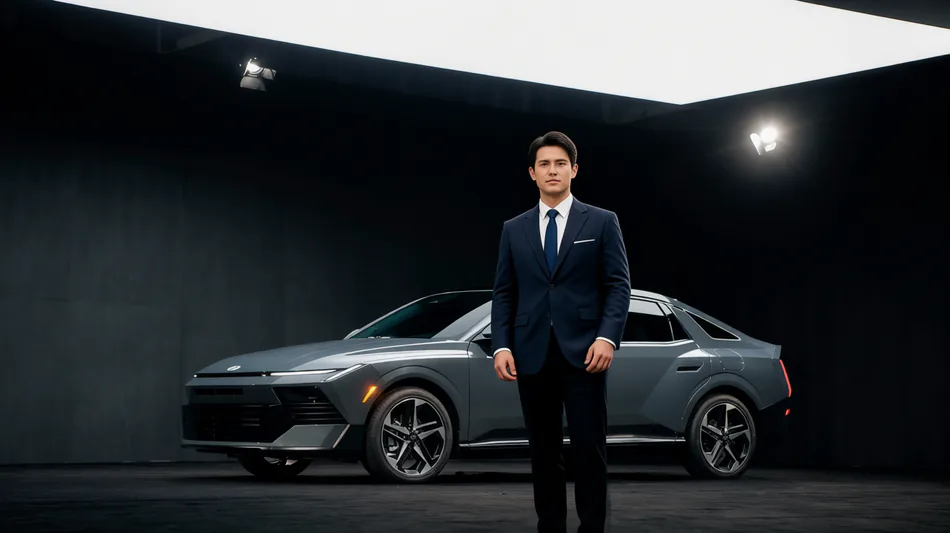
Hyundai has introduced the eighth-generation Elantra for the 2027 model year, a compact sedan that abandons the evolutionary styling of previous iterations in favor of a stark, angular aesthetic. The new vehicle adopts what the manufacturer calls the 'Art of Steel' design language, a style characterized by geometric blockiness and sharp lines that draws comparisons to brutalist architecture. This approach results in a front fascia defined by horizontal and vertical light elements that resemble gun slits, while the rear features a knife-sharp spoiler integrated into the trunk lid. The vehicle’s wheel arches are pronounced and flared, reminiscent of 1980s automotive design trends, creating an imposing silhouette that Hyundai intends to appear larger than its predecessor.
The physical dimensions of the new Elantra have increased across the board to accommodate this design philosophy and improve interior utility. The eighth-generation model is 86 millimeters longer, 30 millimeters wider, and features a wheelbase that is 30 millimeters longer than the seventh-generation car it replaces. Hyundai states that these external increases have directly translated into greater internal volume. Rear passengers benefit from an additional 30 millimeters of legroom, while both front and rear occupants see improvements in headroom. The company also reports a 22-millimeter increase in shoulder room, though it did not specify whether this measurement applies to the front seats, rear seats, or the cabin width as a whole.
Despite its blocky and aggressive exterior appearance, Hyundai claims the new Elantra is aerodynamically efficient. The vehicle achieves a coefficient of drag of 0.26, a figure that reportedly surpasses the efficiency of the current Toyota Prius. This contrast between the harsh exterior and functional efficiency sets the stage for the interior, which Hyundai describes using its 'Curve of Upholstery' design language. According to Simon Loasby, Head of Hyundai Style, the goal is to bring the softness and comfort associated with home furniture into the vehicle cabin. This creates a deliberate juxtaposition between the aggressive dynamism of the exterior and a laid-back, human-focused interior environment.
The cabin features soft rolled curves and utilizes space efficiently by carving out nooks for storage. A center armrest, described as bread-loaf-shaped, opens to reveal a compartment for small items such as sunglasses or keys. The seats are designed with comfort in mind rather than performance support. The dashboard layout is dominated by two digital displays: a slim, horizontal rectangular screen positioned directly ahead of and above the steering wheel, and a traditional landscape-oriented center touchscreen.
The driver-facing display measures 9.9 inches diagonally and houses three configurable widgets. These can be set to show various data points, including engine revolutions per minute, speed, navigation information, or fuel levels. Because of its specific placement, the screen remains visible regardless of steering wheel adjustments. The center touchscreen is standard at 12.9 inches, with an optional 14.6-inch version available. Essential vehicle readouts such as gear selection, speed, and fuel are anchored in the top-left corner of this central screen rather than the driver display. The interface allows for customization, enabling users to configure two or three distinct windows on the right side of the screen. One window is always dedicated to vehicle functions, while the remaining space can be allocated entirely to maps or split between navigation and media information.
The infotainment system powering these displays is a new platform called PLEOS, which is built on Android Automotive OS. It supports wireless Apple CarPlay and Android Auto connectivity. The cabin includes two wireless charging pads in the front, allowing simultaneous cord-free charging for multiple devices. Below the screen, Hyundai has retained physical controls, including a row of labeled toggle switches and two twist knobs. These provide tactile input for climate control and media functions, offering a hybrid approach that allows drivers to adjust settings via touch or physical manipulation.
Hyundai is also debuting a new voice assistant named Gleo in the Elantra and Tucson models. The company claims the AI-powered system can intuit user desires regarding navigation routing and climate control by analyzing inputs such as in-car conversations. However, independent testing of the system has shown limitations with complex queries. For instance, requests to locate highly rated restaurants based on specific cravings did not yield functional results. Concerns regarding privacy have also been raised about digital assistants monitoring cabin audio, although Hyundai notes that smartphones already perform similar functions.
At launch, Hyundai is offering only one powertrain for the Elantra in North America: a 2.0-liter inline-four engine paired with a continuously variable transmission (CVT). This powertrain produces 147 horsepower and 132 pound-feet of torque, figures that are identical to the base engine in the current seventh-generation model. Fuel economy estimates for the U.S. specification are 6.5 liters per 100 kilometers. In Korea, where sales began in the third quarter of this year, the Elantra (badged as the Avante) offers a hybrid variant with a turbocharged 1.6-liter engine that produces 155 horsepower and achieves 4.4 liters per 100 kilometers combined. The absence of a hybrid option in official North American documents has led to speculation about its future availability, though Hyundai has remained silent on the matter.
Canadian sales for the eighth-generation Elantra are scheduled for 2027. While specific pricing has not been announced, Korean domestic pricing starts at 23,980,000 won, which converts to approximately CAD $25,774. This suggests a Canadian price point that may be marginally higher than the current MSRP of $23,499 for the 2026 model. The new Elantra represents a significant shift in Hyundai’s design direction, balancing a cold, imposing exterior with a warm, technology-rich interior. A full road test will be conducted once vehicles become available for evaluation.
謝-A.Xiè--THT-士蔑報