Death toll in Madagascar cyclone rises to 38, 12,000 displaced / Photo: Tsiky SIkonina - AFP

A cyclone packing violent winds has killed at least 38 people and caused devastation in Madagascar's second-largest city, prompting the country's leader to call for "international solidarity", the national disaster authority said Thursday in an updated toll.
Cyclone Gezani made landfall on Tuesday, slamming into the eastern coastal city Toamasina, with winds reaching 250 kilometres (155 miles) per hour.
In a new report Thursday afternoon, the National Office for Risk and Disaster Management (BNRGC) said it had recorded 38 deaths, while six people remained missing and at least 374 were injured.
More than 12,000 people were displaced, it said.
Madagascar's new leader Colonel Michael Randrianirina on Thursday called for "international solidarity" after the cyclone "ravaged up to 75 percent of Toamasina and it surrounds".
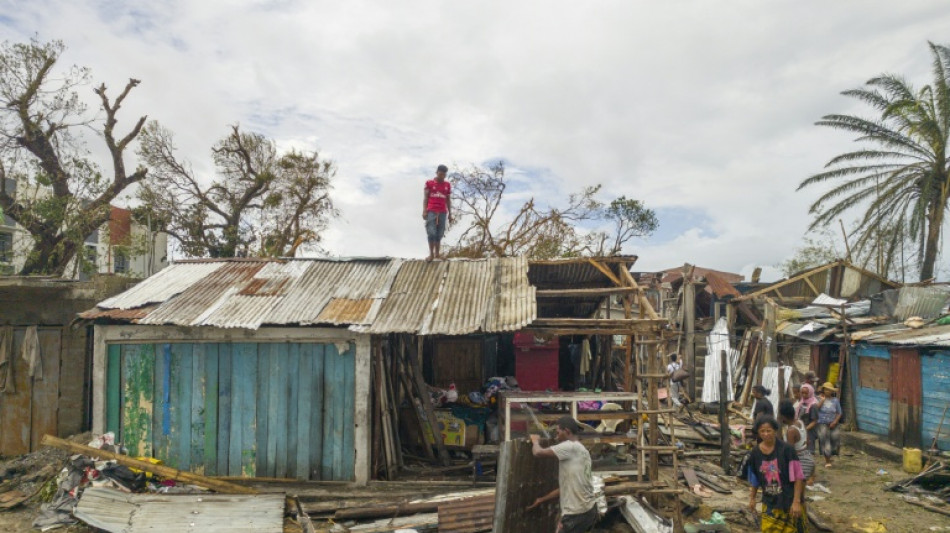
AFP images Thursday showed the battered city of 400,000 people littered with hundreds of trees felled by strong winds and roofs blown off buildings.
Residents dug through piles of debris, planks and corrugated metal to repair their makeshift homes.
More than 18,000 homes were destroyed in the cyclone, according to the BNRGC, with over 50,000 damaged or flooded.
The storm also caused carnage in the Atsinanana region surrounding the city, the authority said, adding that post-disaster assessments were still under way.
The CMRS cyclone forecaster on France's Reunion island confirmed Tuesday that Toamasina had been "directly hit by the most intense part" of the storm.
The cyclone's landfall was likely one of the most intense recorded in the region during the satellite era, rivalling Geralda in February 1994, it said. That storm left at least 200 dead and affected half a million more.
Gezani weakened after landfall but continued to sweep across the island as a tropical storm until Wednesday night.
It is forecast to return to cyclone status as it reaches the Mozambique Channel, according to the CMRS, and could from Friday evening strike southern Mozambique, which has already faced devastating flooding since the beginning of the year.
Cyclone season in the southwest Indian Ocean typically lasts from November to April and sees around a dozen storms each year.
楊-C.Yáng--THT-士蔑報