Dressed to kill: Haircuts cap menacing look of Japan's yakuza / Photo: Yuichi YAMAZAKI - AFP

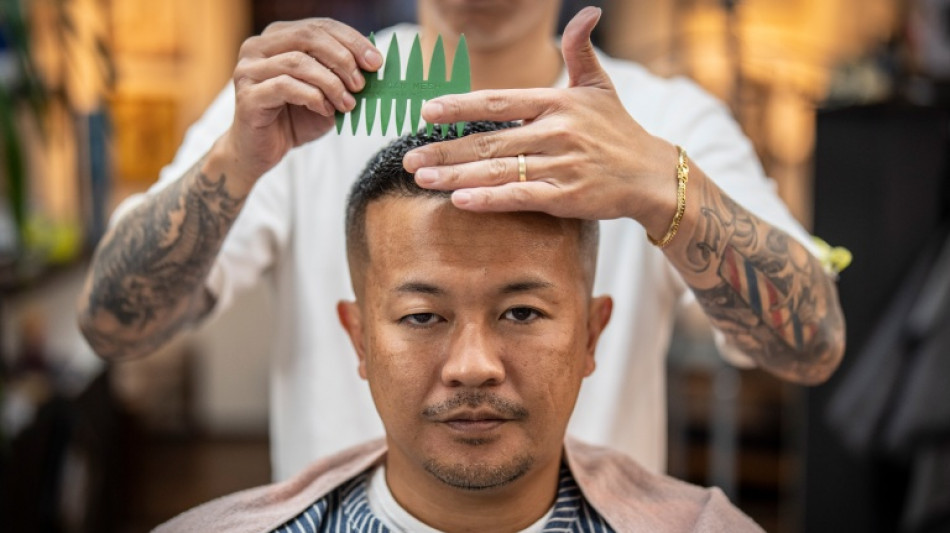
At a barbershop in Tokyo, yakuza gangster Tekisasu glances in the mirror at his meticulous new cut and thanks the hairdresser for the weekly trim crucial to his mobster trade.
Japan's yakuza operate an organised crime empire worth billions of dollars and have long dominated the country's drug rings, gambling dens and sex trade.
From precise haircuts to sharp suits, many mobsters try to project an image of menace and wealth, and barbers play a key role in crafting it.
"The yakuza are all about vanity," said Tekisasu, whose moniker means "Enemy Stabber", in an exclusive interview that took months to set up.
"The neater someone's appearance, the better his reputation becomes," the 44-year-old active gangster allied to a major clan told AFP.
"Say you want to sell someone on a deal... they won't take you seriously if your punch perm is all in shambles," he said, referencing his ultra-short, tightly curled style.
For Tekisasu and his fellow mobsters, barbershops also represent a break from the violent lifestyle they have chosen and an intensifying crackdown by authorities.
During his monthly, two-hour perming ritual -- plus a weekly haircut that keeps the back and sides of his head shaven in a high "skin fade" -- the tattooed gangster can stop watching his back.
There are fewer and fewer mobsters like him, with police saying yakuza numbers dipped last year to a record low of 17,600 nationwide.
But even as their forces shrink, the gangsters represent a potent threat, with younger groups of thugs brought in to diversify their business, police warned in a recent report.
Still, Tekisasu's barber -- who counts around 10 active yakuza among his repeat clientele -- says he has no qualms about serving them, even though his craftsmanship amplifies their "don't-mess-with-me aura".
"All I do is make them look cooler," said the 32-year-old, denying there was anything wrong in making dangerous gangsters appear more aggressive.
The barber requested anonymity because any association with the mafia could threaten the reputation of his business.
- Grinding out a living -
Despite their criminal activities, many people -- including some of the gangsters themselves -- hold romantic views of the yakuza's traditions, lifestyles and codes of honour.
The reality is often more mundane, with more and more rank-and-file mobsters said to grind out a living by targeting vulnerable people through crimes such as organised fraud.
Originally a gangsta rapper, Tekisasu delved into the yakuza world in his mid-20s, but was arrested in 2021, then jailed, before being released last year.
Now, he is at the barbershop for a hot-towel shave and respite from a life where he says, "total darkness can be just an inch ahead".
"When there is fighting among syndicates, we have no choice but to go through it," he said. "It's a matter of pride."
"I wish I could just live smiling, without hurting anyone or getting hurt. But that's not how things work in this world."
Yakuza face pressure to remain in the violent underworld, but they can and do choose to leave. An estimated 320 gangsters quit in 2024 thanks in part to efforts by authorities.
Under Tokyo's anti-yakuza laws, businesses are prohibited from knowingly "providing benefits" to mobsters to aid their activities.
Barbers who intentionally help yakuza clients maintain their looks are unlikely to violate the rules, provided the transactions are fair, according to retired anti-mafia detective Yuichi Sakurai.
But any preferential treatment, like "setting the haircut price excessively low", may constitute an illegal favour, he told AFP.
In his decades-long career, the ex-detective himself noticed many mobsters "value frequent haircuts to retain their intimidating exteriors".
Ideally, the laws should be tightened to bar the yakuza from any place of relaxation -- including barbershops -- "if we really want to eradicate them", he said.
Years of strict anti-mafia laws have excluded the yakuza from basic infrastructure in Japan, including opening bank accounts, renting housing and obtaining credit cards.
"We can only pay in cash most of the time. It would be very tough for us if Japan ever fully goes cashless," Tekisasu said.
- 'Rival gangsters' -
Far from being dismayed that gangsters frequent his parlour, Tekisasu's barber is proud that they trust his "uncompromising standards".
Following in the footsteps of his barber father, adept at a range of "bad-boy" haircuts, he has made punch perms his forte.
The tiny, rigid curls emerged in Japan in the 1960s and '70s as a backlash against longer, Beatles-inspired male hairdos.
They have since found a devoted fanbase in manual labourers, teen delinquents and the yakuza.
"Punch perms are what I live for as a barber," said the gregarious shopkeeper, whose full-arm tattoos include depictions of scissors, a comb and a dryer.
When a client who was "obviously yakuza, with his fingertip missing and eyes dead serious", first sought his service, he resolved to "blow him away with my skills" and make him a regular.
While lore has it that yakuza gangsters found the punch perm's ultra-short length useful during brawls, Tekisasu says that in his world, "fights don't usually involve hair-pulling".
"When we 'fight,' it's ultimately about shooting or trying to take each other's lives," he said.
"I simply like the punch perm because it's manly and cool."
Yakuza patronage involves risks, however.
"The last thing I want is for rival gangsters to run into each other here," Tekisasu's barber said. The onus is thus on him to space their appointments apart.
But "once they leave the shop, whatever happens out there is going to happen. When they walk out the door, I don't talk to them anymore."
王-A.Wong--THT-士蔑報