Cubans queue for fuel as Trump issues oil ultimatum / Photo: ADALBERTO ROQUE - AFP
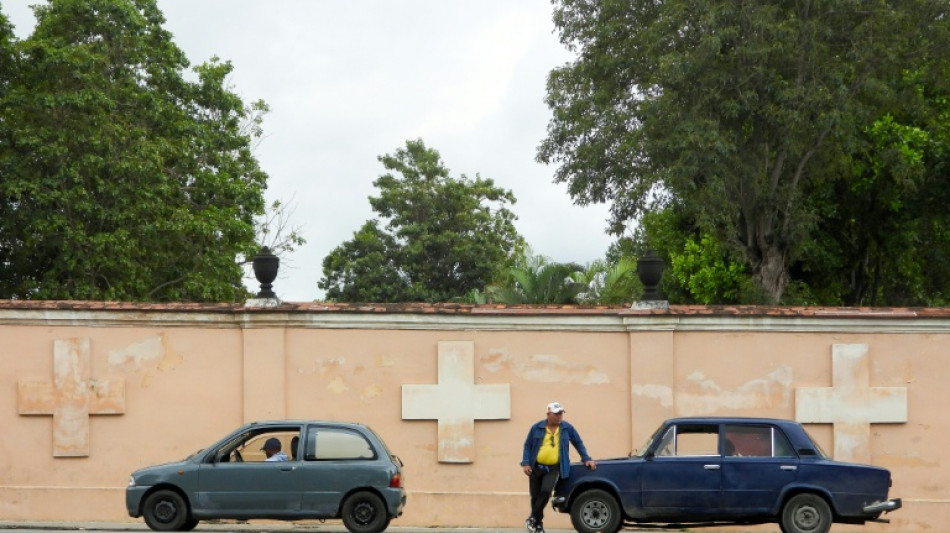
Cubans queued around the block for fuel Friday as the island's Communist government decried US efforts to "suffocate" the already‑stricken economy with a virtual oil blockade.
Hours after US President Donald Trump approved punitive tariffs against countries supplying oil to Cuba, lines formed at stations in the Cuban capital.
"This will directly hit ordinary Cubans sooner or later -- that's clearly the intention," Jorge Rodriguez, a 60‑year‑old IT worker, told AFP as he waited in line.
Trump's executive order was denounced in Havana as an attempt to throttle an economy already suffering power blackouts of up to 20 hours a day and critical shortages of fuel, medicines and food.
The decree effectively forces Cuba's partners to choose between trade with the world's largest economy or with an impoverished island of 11 million people.
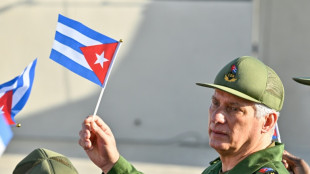
Cuban President Miguel Diaz-Canel denounced attempts by a "fascist, criminal and genocidal" US cabal to "suffocate" Cuba.
Cuban is facing its most serious economic crisis since the 1991 collapse of the Soviet Union, its principal benefactor.
Until recently, the Cuban economy spluttered by on cheap supplies of Venezuelan oil.
But these have dried up since US special forces swooped into Caracas and deposed that country's leader, Nicolas Maduro, on January 3.
In 2025, Cuba generated only half of the electricity it needed, according to official statistics analyzed by AFP.
- Escalation -
Trump and his Cuban-American Secretary of State Marco Rubio have made no secret about their desire to bring regime change in Havana.
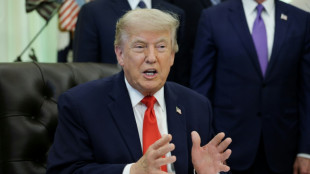
After the fall of Maduro, Trump warned Havana to "make a deal soon" or face unspecified consequences. "NO MORE OIL OR MONEY FOR CUBA: ZERO!" he stated, claiming Cuba was "ready to fall."
Several top US officials, including Rubio, have close ties to Florida politics, where toppling the regime is an article of faith.
"It's now or never," said US lawmaker Maria Elvira Salazar, calling for the White House to make a final push to topple Diaz-Canel and the Communist party that has ruled Cuba for seven decades.
Trump's trade ultimatum named Cuba as an "extraordinary threat" to US national security, raising the specter of potential military action.
The order alleges that Cuba "aligns itself with -- and provides support for -- numerous hostile countries, transnational terrorist groups, and malign actors adverse to the United States," including Russia, China, and Iran, as well as the militant groups Hamas and Hezbollah.
Since late 2025, the United States has maintained an armada of naval assets in the Caribbean, including warships, fighter jets, and thousands of military personnel.
- 'Humanitarian crisis' -
Trump's latest gambit is a particular problem for Mexico -- one of few countries still sending oil to Cuba but also highly dependent on US trade.
Mexican President Claudia Sheinbaum warned Friday that Trump's oil tariffs "could trigger a far-reaching humanitarian crisis directly affecting hospitals, food supplies, and other basic services for the Cuban people."
While reiterating her "everlasting solidarity" with the Cuban people, the president added, "We don't want to put our country at risk in terms of tariffs."
Trade experts say deliveries of oil from Mexico to Cuba have slowed in recent months and Sheinbaum has not refuted reports that state oil firm PEMEX plans to halt shipments.
Cuba's traditional allies have offered rhetorical support, but announced no concrete plans for help.
Caracas, which has been seeking closer ties with Washington, slammed Washington's "punitive" measures.
"Venezuela expresses its solidarity with the people of Cuba and calls for collective action by the international community to address the humanitarian consequences arising from aggressions of this nature," the foreign ministry said in a statement.
For its part, China said it "stands firmly against moves that deprive the Cuban people of their rights to subsistence and development and inhumane practices," according to foreign ministry spokesman Guo Jiakun.
Diaz-Canel has said there were no talks with Washington and vowed the Caribbean island's residents were "ready to defend the homeland to the last drop of blood."
胡-L.Hú--THT-士蔑報