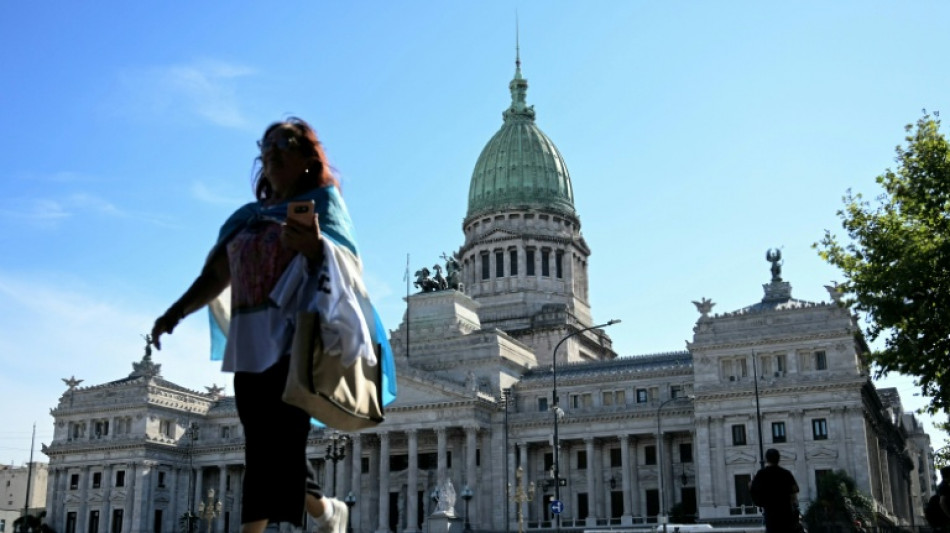
Striking Argentine workers slow down Buenos Aires in protest over labor reforms / Photo: Juan Mabromata - AFP
Shops and supermarkets closed, public transport was scarce and garbage went uncollected Thursday as Argentine workers staged their fourth general strike of President Javier Milei's term, this time against labor reforms.
The few buses running in Buenos Aires were nowhere near full, although car traffic was unusually heavy as many workers observed the 24-hour strike.
Bus and train stations that are normally bustling were largely empty. On roads leading into the capital, small groups of protesters blocked traffic.
The CGT labor federation said more workers adhered to the walkout call than for any of the previous three strikes.
"It has levels of compliance like never before under this government," union leader Jorge Sola told Radio con Vos. "The support is impressive."
The contested reforms pushed by budget-slashing Milei, an ideological ally of US President Donald Trump, would make it easier to hire and fire workers in a country where job security is already hard to come by.
It would also reduce severance pay, limit the right to strike, increase work hours and restrict holiday provisions.
The measure was approved by the senate last week and is meant to come before the chamber of deputies Thursday.
If approved, it will go back to the Senate for a final green light.
"I want to work because I am afraid of losing my job but I cannot get there. I will have to walk," said Nora Benitez, a 46 year old home caregiver looking at a five kilometer (three mile) trek to her job along streets reeking of piled up garbage.
- Reforms spark protests -
The labor action comes as Argentina's economy is showing signs of a downturn in manufacturing, with more than 21,000 companies having shuttered in two years under Milei.
He had come to power after wielding a chainsaw at rallies during the 2023 election campaign to symbolize the deep cuts he planned to make to public spending.
Unions say some 300,000 jobs have been lost since Milei's austerity measures began.
Most recently, Fate -- Argentina's main tire factory -- on Wednesday announced the closure of its plant in Buenos Aires, prompting some 900 job cuts.
The last general strike in Argentina was on April 10, 2025, but adherence was uneven as workers in the public transport system did not join.
Last week, thousands of people demonstrated in Buenos Aires as senators debated the reform bill, and clashes with police resulted in about 30 arrests.
On Tuesday, the government issued an unusual statement warning reporters about the "risk" of covering protests, and announced it would establish an "exclusive zone" from which the media can work.
"In the event of acts of violence, our forces will act," a statement from the security ministry said.
Almost 40 percent of Argentine workers lack formal employment contracts, and unions say the new measures will make matters worse.
But the government argues they will in fact reduce under-the-table employment and create new jobs by lowering the tax burden on employers.
Milei, in office since December 2023, has achieved at least one of his macroeconomic goals: bringing annual inflation down from 150 percent to 32 percent in two years.
But it is a success that has come at the cost of massive public sector job cuts and a drop in disposable income that has sapped consumption and economic activity.
Milei will follow Thursday's events at home from Washington, where he is attending the first meeting of Trump's "Board of Peace," which has drawn criticism as an attempt to rival the United Nations.
劉-T.Liú--THT-士蔑報