All eyes on Warsh as Fed chair kicks off key central banking meeting
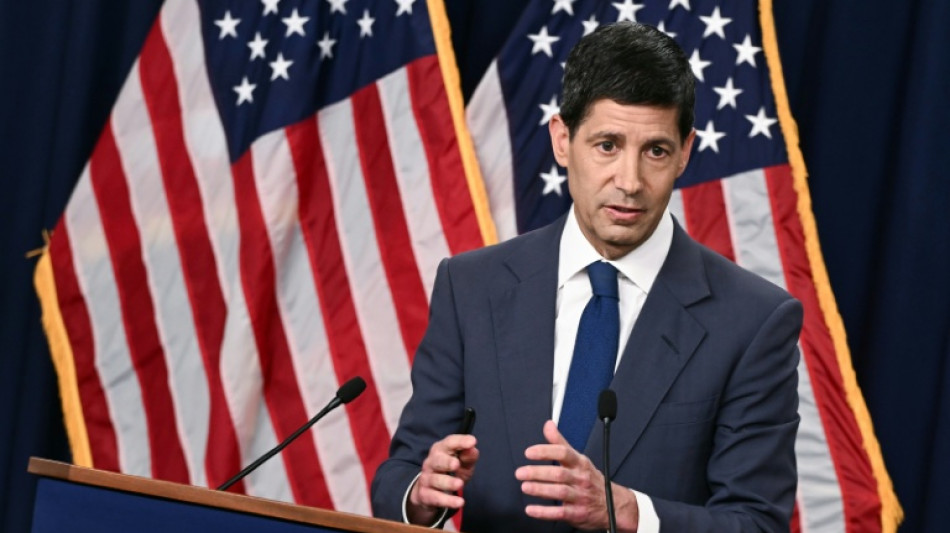
/ Photo: Brendan SMIALOWSKI - AFP
Markets will be wanting much -- but expecting little -- from US Federal Reserve Chair Kevin Warsh as he kicks off the Jackson Hole central banking conference in Wyoming on Friday.
Warsh, appointed by US President Donald Trump and in office since May, will speak at 8:00 am (1400 GMT) at the remote and storied venue for monetary policy watchers.
Since 1982, policymakers and prominent economists have gathered in this valley ringed by mountains in Grand Teton National Park -- known to most people more for its bison than for spirited debates on macroeconomics.
Fed chiefs traditionally use their first speech at Jackson Hole to lay out their vision for how they see the path for monetary policy and the central bank as a whole.
Since taking office, however, Warsh has been adamant about saying less, not more.
He has refrained from giving guidance on the direction interest rates may take in the world's largest economy, and refused to share his views on the economic outlook or how surging inflation and other challenges should be tackled.
"I don't think he's going to do a complete 180 and all of a sudden, become a great communicator," said Gregory Daco, chief economist at EY-Parthenon.
Daco said Warsh's speech was likely to stand in contrast to ones from his predecessors, who often spoke about their vision of economic policy-making or current crises.
"(For Warsh) it's likely to be one that remains quite abstract, focusing on the need to reform the Fed regime and the need to correct for the mistakes of the past," he said.
"That may be the speech we get, which is quite low on content and low on policy."
- 'Now is the time' -
The world's largest economy has delivered robust growth despite facing significant challenges, including shocks from Trump's tariffs and his war on Iran, which has sent global energy prices skyrocketing.
Both policies have fuelled inflation in the United States, which has remained above the Fed's long-term two-percent target for more than half a decade.
On Wednesday, the Fed's preferred inflation gauge clocked in at 3.7 percent, down 0.4 percentage points from May, when it hit a three-year high.
A quarter of voting members on the Fed's rate-setting committee have called for the central bank to raise rates in order to take on the crisis. The majority held rates steady at their last meeting in July.
On Thursday, Cleveland Fed President Beth Hammack -- one of the dissenters -- said the bank needed to raise now or face further pain later.
"I believe now is the time to act," she told CNBC in Jackson Hole.
"The longer inflation stays above our objective, the harder it will be for us to bring it back down, and the more pain that individuals and businesses are going to be experiencing."
Bernard Yaros, lead US economist at Oxford Economics, said markets wanted more from Warsh, particularly on how he views the economic outlook, but that investors were not holding their breath for him to be forthcoming.
Hammack pushed back against Warsh's views on communicating less. While she did not name the Fed chair, responding to a question she said communication was a key responsibility to fulfil the duties of an independent Fed.
"Hand in hand with that independence comes accountability and transparency," she said. "And I feel like it's important for me, as a member of the committee, to talk about how I see the economy unfolding."
袁-J.Pān--THT-士蔑報