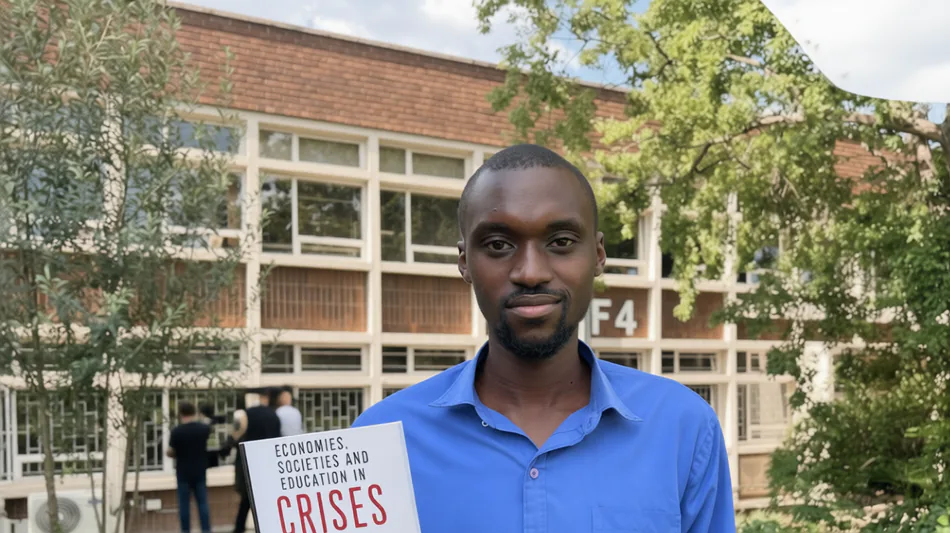
NWU Student Silindokuhle Mthiyane Publishes Book on Breaking Western Dependence

Silindokuhle Mthiyane, a 23-year-old postgraduate student at North West University, has published an academic book analyzing global inequality and the influence of Western powers. He argues that African nations must diversify their economic relationships and reduce dependence on Western institutions by strengthening trade ties with BRICS countries and other allies.
Silindokuhle Mthiyane, a 23-year-old postgraduate student at North West University (NWU), has published an academic book urging African nations to break their economic and political dependence on Western countries. The study explores international relations, global inequality, and the historical impact of colonialism on developing economies.
Originally from Mount Frere in the Eastern Cape, Mthiyane is currently pursuing an Honours degree in Curriculum Studies at NWU. He stated that his objective was to help readers understand the systemic forces shaping the global economy and politics, particularly how powerful Western nations influence international institutions such as the United Nations, the World Bank, the International Monetary Fund (IMF), and the World Trade Organisation.
In the book’s opening chapter, titled "Who Runs the World?", Mthiyane examines the role these institutions play in global governance. He argues that they frequently serve the interests of Western countries at the expense of previously colonized and developing nations. A significant portion of his analysis focuses on the debt burden placed on developing countries through loans from the IMF and the World Bank. Mthiyane contends that high interest payments often divert funds away from essential social services, including education, healthcare, and business development, toward debt servicing.
The text also addresses what Mthiyane describes as "social control," a mechanism he believes distracts populations from critical global issues affecting their daily lives. He emphasizes that the book is not solely intended to highlight problems but to encourage readers to consider viable solutions.
In the context of South Africa, Mthiyane advocates for reducing reliance on Western nations and strengthening relationships with other global powers. He identifies BRICS as a key platform for pushing reforms in global institutions and exploring alternative economic partnerships. "I believe that we must diversify our relations. We must not be just dependent on Western countries," he said.
Mthiyane suggests that African countries should collaborate more closely, increase trade with Asian nations, and invest in local production. "We start by being less reliant on Western countries, producing things on our own and depending on ourselves and our African allies," he explained.
The book utilizes a funnel approach, beginning with global challenges before narrowing down to their specific impact on individual countries like South Africa. Mthiyane hopes the publication will inspire readers to conduct their own research, question the current world order, and gain a deeper understanding of the forces influencing their lives.
林-L.Lín--THT-士蔑報