Malta Maritime Forum Study Reveals €1 Billion Economic Contribution Amid Growth Concerns

The Maltese maritime industry generated almost €1 billion in direct gross value added in 2025 and supported more than 13,000 direct jobs, according to a new economic study commissioned by the Malta Maritime Forum. While the sector has seen significant absolute growth since 2018, its relative share of the national economy has declined, prompting calls for stronger strategic development and government support.
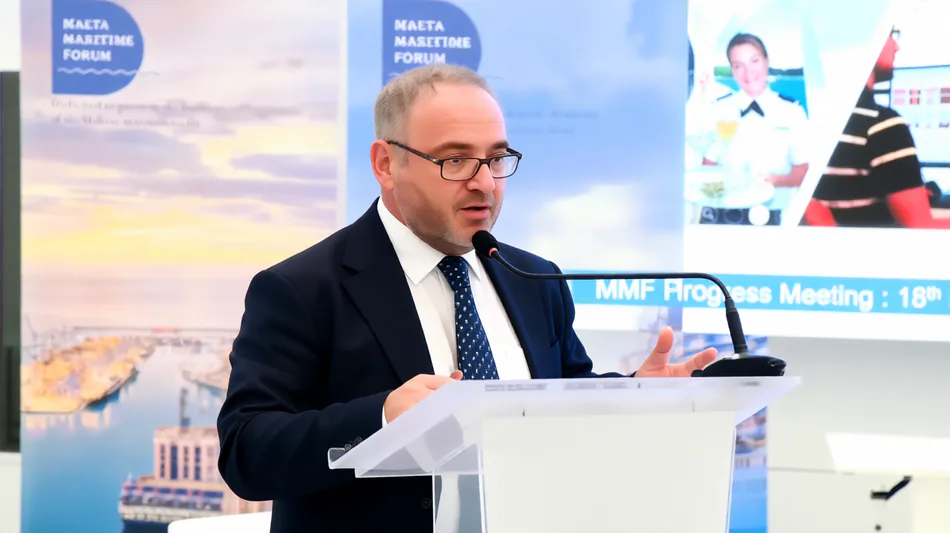
The Maltese maritime industry contributed nearly €1 billion in direct gross value added to the national economy in 2025, supporting more than 13,000 direct jobs, according to a new economic study commissioned by the Malta Maritime Forum (MMF). The research, prepared by E-Cubed Consultants and launched during the Forum’s biannual Progress Meeting, highlights both the sector's substantial expansion and the challenges it faces in maintaining its relative weight within the wider economy.
The study, led by Dr. Gordon Cordina, estimates that the sector generated €999.29 million in direct gross value added last year. This figure represents a growth of approximately 41% compared to the €708.2 million recorded in 2018. Direct employment within the industry rose from 8,831 to 13,329 over the same period. When accounting for indirect and induced effects, the wider employment impact was estimated at approximately 19,100 jobs. Port activities alone accounted for 48% of the sector’s direct gross value added.
Despite these absolute gains, the maritime industry’s share of Malta’s overall economy has declined from around 6% to 4.4% over the past seven years. This reduction reflects the faster expansion of other economic sectors rather than a contraction in maritime activity itself. The findings have intensified focus on Malta Vision 2050, which sets an ambition to increase the maritime industry’s share of GDP from 4% to 7%.
Godwin Xerri, Chairman of the MMF, argued that the sector must be viewed as a broad economic ecosystem rather than solely through the traditional lens of ships, ports, and the national register. He emphasized that future development must focus on the lasting economic value generated around maritime activity, including opportunities in logistics, ship management, repair and retrofit, engineering, professional services, technology, and other specialist activities linked to international shipping.
"The ambition set out in Malta Vision 2050 to increase the sector’s share of GDP from 4% to 7% is an important recognition of its potential, but achieving this will require a stronger commitment to its development," Xerri said. He expressed serious concern regarding the Government’s Budget for 2027, noting that none of the Forum’s 43 submitted proposals were referenced. "We have to express serious concern about the lack of appreciation and allocation of resources to the maritime industry in the Government’s Budget for 2027," he added, hoping this omission did not reflect a lower priority for public funding.
Kevin J Borg, MMF Chief Executive Officer, stated that the study aimed to provide evidence-based recommendations to address future challenges. He identified a clear national maritime transport strategy as a critical starting point for coordinating resources and strengthening Malta’s position as an international maritime centre. The report also stressed the need to develop skills in engineering, digital systems, alternative fuels, cybersecurity, and environmental management. Stronger links between employers, education providers, and public institutions were cited as essential to equipping the workforce for these demands.
The Progress Meeting also featured a presentation on the European Innovation Fund, with a maritime-focused call expected later in 2026. Attendees received updates on the Forum’s policy and lobbying initiatives, including efforts related to the EU Emissions Trading System.
何-H.Hé--THT-士蔑報