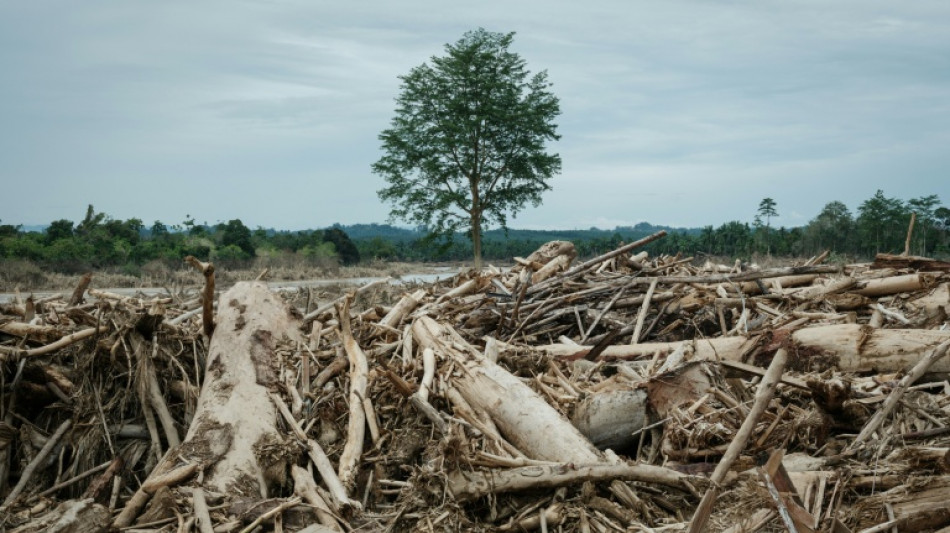
Deadly Indonesia floods force a deforestation reckoning / Photo: Yasuyoshi CHIBA - AFP/File

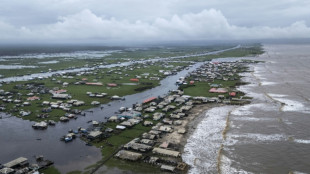
Permits revoked, lawsuits filed, the threat of state takeovers. Deadly flooding in Indonesia has prompted unprecedented government action against companies accused of environmental destruction that worsened the disaster.
But environmentalists who have long warned about the risks of rampant deforestation fear the current response will not solve the problem, and could even make it worse.
Officials from President Prabowo Subianto down have acknowledged the role of deforestation and overdevelopment in last year's flooding and landslides, which killed over 1,000 people in Sumatra.
Mining, plantations, and fires have caused the clearance of large tracts of lush Indonesian rainforest, removing trees that absorbed rain and helped stabilise soil.
Now, Indonesia is prioritising "protecting the environment, protecting nature", Prabowo told attendees at this year's World Economic Forum.
Several dozen companies have had their permits revoked, and the government will reportedly hand management of around a million hectares of land to a state enterprise.
Initially, the government said that would include the Martabe gold mine, which conservationists have regularly accused of environmental damage.
More recently, officials said they were still reviewing potential violations by the site.
But there has been no suggestion of halting development in the worst-affected and most ecologically sensitive areas, like Batang Toru, where Martabe is located.
- World's rarest great ape -
The area is home to the world's rarest great ape, the tapanuli orangutan, just 800 of which were believed to exist in the wild before the disaster.
"Revoking permits is not immediately a win," said Panut Hadisiswoyo, a conservationist and orangutan specialist.
"The idea of revoking should be to stop the devastation, but by continuing these operations, this means industry will continue in this vulnerable area."
Conservationists have lobbied for a moratorium on development in Batang Toru, where tapanuli orangutans suffered first habitat loss and then the flood disaster.
Using satellite data and information on the pre-existing tapanuli orangutan population, experts have calculated nearly 60 animals may have been killed in what they called an "extinction-level event" for the species.
Between 2001 and 2024, Sumatra lost 4.4 million hectares of forest, an area larger than Switzerland, "making the hilly forest landscapes more vulnerable to landslides and flooding", said Amanda Hurowitz, senior director at conservation group Mighty Earth.
Much of that deforestation happened in areas with government permits, and it is not clear that transferring operations to the state will improve matters.
"It's a concern that the state-backed takeover may not guarantee better environmental practices, and that production may be prioritised over conservation," Hurowitz told AFP.
"We have yet to see any plans."
- 'Blessing in disguise' -
Indonesia's environment and forestry ministries did not respond to AFP's request for comment.
Other experts have warned that revoking permits and seizing operations has disrupted plans to audit and investigate companies and determine their precise responsibility for the disaster.
And so far, the government has not outlined plans for forest recovery and environmental remediation, said Timer Manurung, executive director of Indonesian environmental group Auriga Nusantara.
"It's not only revocation but it also has to include remediation, taking responsibility for the destruction," he told AFP.
The government's lawsuits are seeking close to $300 million from six companies, some of which will be set aside for environmental recovery.
But much more money would be needed for real remediation, and other companies are likely to be culpable too, experts said.
And there is no sign yet that other projects linked to large-scale deforestation, including a food and energy plantation plan in South Papua, will be halted in this drive.
The one saving grace, said Timer, has been the public's "very significant rising awareness" of deforestation in Indonesia since the disaster.
That has been "a blessing in disguise".
孫-H.Sūn--THT-士蔑報