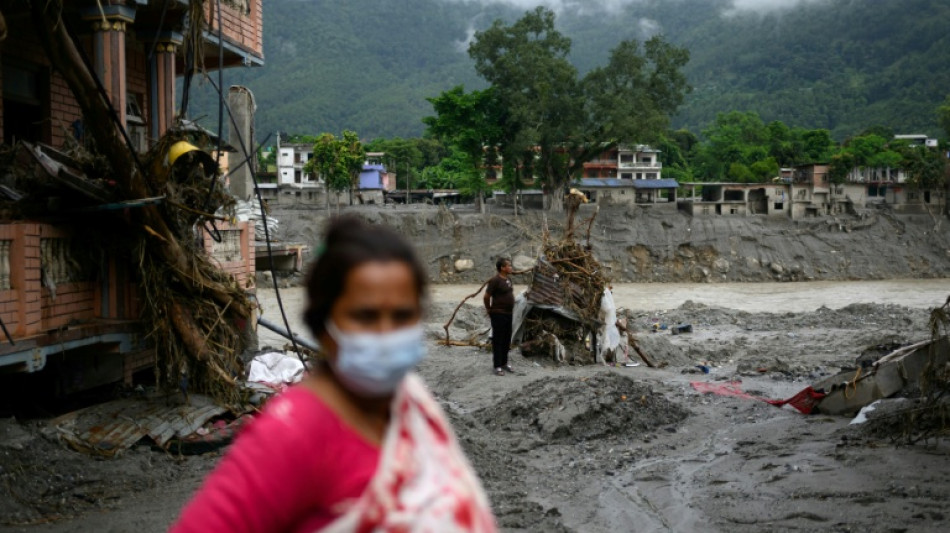
Nepal floods leave trail of destruction, aid challenge / Photo: Manan VATSYAYANA - AFP

Nepal is reeling from devastating floods that cut a swath of destruction through the Himalayan nation, and the government has appealed for financial help in the daunting task of recovery.
Rescue efforts are focused on searching for the more than 2,400 missing. More than 620 people have been confirmed dead.
The government has called for aid for the landlocked nation, reporting a "heavy loss of life and property" as it continues to assess the full scale of the destruction. Risks of further flooding remain.
Here are some of the challenges ahead.
- Tens of thousands in need -
The trauma of Wednesday's catastrophic flooding has been "enormous", with as many as 93,000 people potentially affected in the country of about 30 million, the Red Cross said.
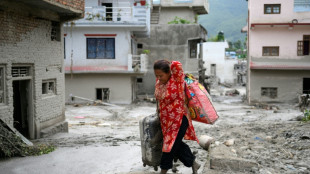
Entire communities have been swept away, leaving families homeless or sheltering in temporary facilities.
"Multiple bridges have been washed away and major roads disrupted, leaving some of the worst-affected communities extremely difficult to reach," the Red Cross said.
At least 18 schools have been destroyed and another 20 damaged, leaving about 10,000 school-age children affected, according to the UN Children's Fund.
- Political challenges -
The disaster comes just ahead of the anniversary of last year's September 8-9 mass anti-corruption protests that toppled the government.
Nepal is now led by Prime Minister Balendra Shah, a 36-year-old rapper-turned-politician widely known as "Balen".
The former Kathmandu mayor swept March elections on a wave of euphoria calling for political change.
His young government now faces the enormous task of rebuilding communities and critical infrastructure.
- Economic hit -
Nepal's economy is already under pressure, with limited resources to respond to a disaster of this scale.
The World Bank estimates 82 percent of Nepal's workforce is in informal employment, with GDP per capita at $1,447 in 2024.
As much as a third of Nepal's gross domestic product comes from remittances, including from significant numbers of workers in Gulf nations.
Tourism contributes about 6.4 percent of Nepal's GDP and supports around 15 percent of employment, according to the World Bank.
The floods could add to the economic fallout by disrupting trekking, pilgrimage and other tourism, particularly in the Himalayan north.
- Health risks -
The floods destroyed three health posts and partially damaged a hospital, with access to two other hospitals affected, according to the UN's World Health Organization (WHO).
"Displacement, overcrowding, damaged water and sanitation systems, and disrupted health services may increase the risk of communicable diseases," WHO said.
- Power damaged -
The Nepal Electricity Authority said 11 hydropower stations and one solar power station had stopped operating, with a combined capacity of 431.1 megawatts.
That represents about 10 percent of Nepal's installed electricity generation capacity, according to the authority.
Another 15 power projects under construction, with a combined planned capacity of 470 megawatts, have also been damaged.
More than 900 hydropower workers are missing.
曾-M.Zēng--THT-士蔑報