A Cuban zoo, and its animals, in epic battle for survival / Photo: YAMIL LAGE - AFP

Every day, veterinarians and zookeepers make their way to Cuba's National Zoo by whatever means they can, determined to not abandon the nearly 1,000 animals in their care and help save species at risk of extinction.
Their dedication and food donations are vital to keeping alive an array of rhinos, jaguars and tigers -- including an extremely rare white tiger -- in the midst of a severe crisis that has left many Cubans struggling to feed themselves.
Just getting to the reserve situated 20 kilometers (12 miles) from central Havana is a headache for staff, as public transportation has come to a near standstill nine months into a US fuel blockade.
"The workers come by bicycle, pedal scooter or electric motorbike to ensure the animals have food and water every day," said Yoel Machado, the zoo's animal welfare manager.
Their efforts are about more than keeping the animals fed.
The 345-hectare (850-acre) park serves as a genetic reserve of international conservation importance, housing breeding populations of vulnerable or endangered species, including black and white rhinos, hippos and jaguars.
Yet the same crisis that has left workers scrambling to source meat, medicine and water has forced the zoo to curb reproduction programs and increasingly rely on handouts to sustain its animals.
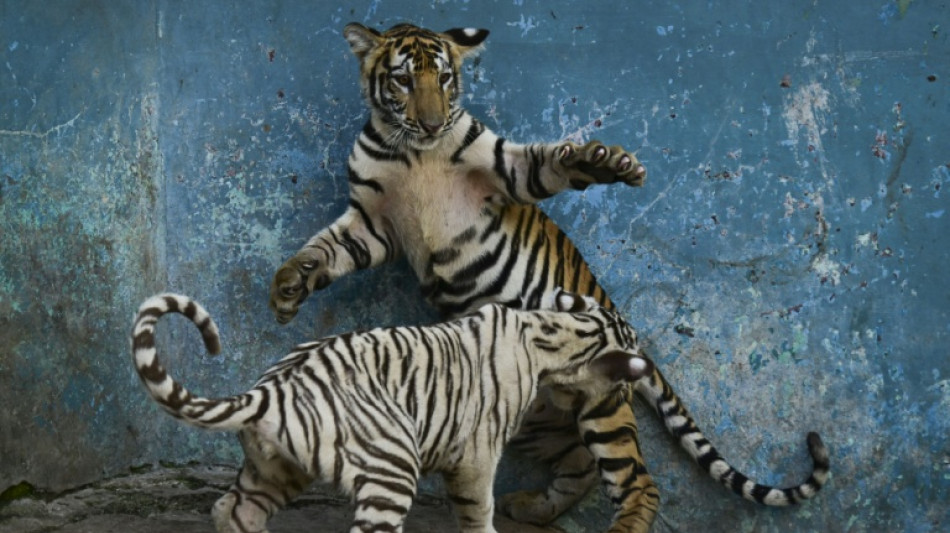
During a recent visit by AFP, two Bengal tiger cubs, one an extremely rare white specimen, frolicked in their enclosure beneath the watchful gaze of their mother, oblivious to the strenuous efforts made to keep them alive.
AFP did not see any animals that appeared malnourished or ill, but Angel Cordero, the veterinarian in charge of big cats, said the tiger cubs "could be in better shape."
He revealed he needed to ration their food to prevent it from running out.
"It's no use giving them plenty if it only lasts three days," he said.
Big cats need about seven kilograms (15 pounds) of meat per day per adult, but such quantities are hard to come by.
Even when it is available, recurring blackouts of up to 30 hours at a stretch make it difficult to preserve.
With fuel extremely scarce, there's also the issue of how to distribute food in a nature reserve the size of New York's Central Park.
- 23 days without power -
For now, private donors have come to the rescue for the zoo's various needs.
Every Monday, Ana Fernandez, a Cuban-American woman born in Tennessee who has been living in Cuba for nine years, donates meat.
"The animals shouldn't have to suffer," the 50-year-old said, though she added that "some days it's not enough for all of them."
Recently, the reserve went 23 days without electricity, which meant it also lacked running water.
The staff "didn't just sit around waiting for things to fall from the sky," the zoo's director Juan Carlos Corella said.
"We looked for solutions, water trucks were brought in, and we found food for the animals almost daily," he said, while admitting that keeping the park open has become "very difficult."
An exodus of vets has added to the zoo's woes.
More than a third have left for better-paying jobs elsewhere, mostly in Cuba's burgeoning private sector.
Some wait tables in cafes while others work for private veterinary clinics.
- Limiting breeding programs -
The zoo is home to the only breeding group of black rhinos outside of Africa, as well as a large population of white rhinos, the largest herd of Grant's zebras in the Americas and hippos that regularly bear calves.
"Here we have a high genetic value, and one of immense international importance," Machado, the animal welfare manager, explained.
However, the crisis has forced the park to slow down its breeding programs.
The reason is simple: each new offspring requires more food, medicine, and staff.
"We can't keep increasing the number of animals," Machado said, adding that he preferred to ensure the current population was "as well cared for as possible."
And yet life keeps renewing itself, regardless.
In recent months the zoo has welcomed baby tigers, hyenas, jackals, and a black dromedary named Esperanza (Spanish for "Hope"), the first of its kind born in Cuba in three decades.
袁-J.Pān--THT-士蔑報