Indonesia Forest Fires: Health Crisis, Diplomatic Strains and the Search for Solutions
Severe forest fires in Indonesia have burned over three million hectares this year, triggering a public health emergency and straining diplomatic relations with neighboring Malaysia, Singapore, and the Philippines. As haze levels rise and economic impacts mount, experts emphasize that breaking the recurring cycle requires stricter law enforcement, sustained frontline prevention funding, and regional cooperation.
Severe forest fires in Indonesia have burned over three million hectares this year, triggering a public health emergency and straining diplomatic relations with neighboring Malaysia, Singapore, and the Philippines. As haze levels rise and economic impacts mount, experts emphasize that breaking the recurring cycle requires stricter law enforcement, sustained frontline prevention funding, and regional cooperation.
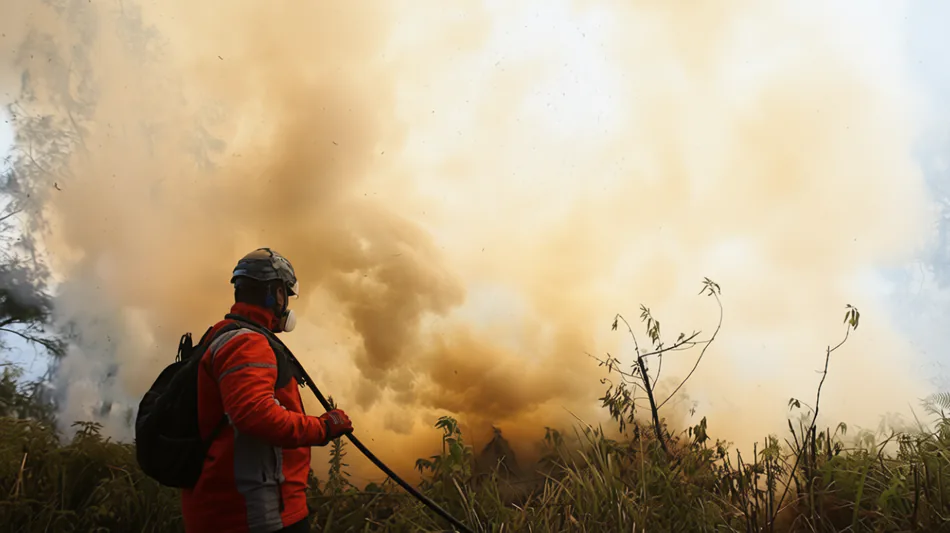
The fires, which have been particularly intense in Sumatra and Kalimantan, have damaged the health and finances of millions of Indonesians while sending hazardous haze across borders. Malaysia, Singapore, and the Philippines have raised public health and safety alert levels to mitigate these impacts. Although the crisis gained global headlines only about a month ago, Indonesia was already deep into the haze by summer, with hotspots increasing on fire-prone islands.
According to Nusantara Atlas, an independent monitoring platform, fires affected 1.9 million hectares between January and September, with much of this damage occurring in September. Meteorologists noted that September was one of the driest on record in over three decades. Between September and November, an additional one million hectares burned. While the current intensity marks the worst fire season in 11 years across six provinces, Indonesia has grappled with severe forest fires for more than four decades.
The Great Fire of Borneo in 1982 was driven by extreme drought and slash-and-burn clearing for agriculture. Large fires have recurred every few years since, but intense regional attention only focused on the issue after the 1997 season, when nearly 10 million hectares burned, predominantly in Sumatra and Kalimantan. The haze from that year spread to Malaysia, Singapore, Brunei, and Thailand, costing the region USD 10 billion through impacts on transportation, crops, timber, tourism, and healthcare, according to the World Resources Institute (WRI).
Despite regional action plans established after 1997, fires have continued to return in 2005, 2006, 2013, 2014, 2015, 2019, 2023, and this year. These recurring events not only harm health and finances but also strain diplomatic relations.
This year’s fire season has been dominated by peat fires. Protected peatlands accounted for half of all burned area in Indonesia from January to September, according to Kompas. Indonesia holds almost 36% of the world’s peatlands, covering more than 24 million hectares. Composed of organic matter drenched in water for centuries, these areas are considered massive carbon sinks. In their natural state, peatlands are waterlogged and fire-resistant. However, when drained, degraded, or dried out, they become highly flammable.
Peatlands are typically razed to produce palm oil, timber, and other export-oriented commodities. Peat fires burn underground, allowing them to spread undetected and making them difficult to extinguish. They release stored carbon dioxide and spew hazardous haze. The WRI notes that almost all fires in Indonesia are caused by human activities.
The 1997 fires were exacerbated by the Mega Rice Project, which aimed to turn one million hectares of peat into rice paddies in Central Kalimantan. Launched by the Suharto regime to feed the country’s growing population, the project involved digging canals to drain water and using slash-and-burn methods to clear forest. Combined with a prolonged dry season triggered by an extreme El Niño that year, these practices created uncontrollable underground peat fires. The ex-Mega Rice Project area has since become the epicenter of regular fires in the province.
Fires typically ramp up during the dry season from June to October, particularly during El Niño years. Although land clearing by burning was banned under Indonesian law in 2009, a government minister stated in 2019 that over 80% of oil palm plantations did not meet applicable regulations.
El Niño and global warming have worsened the forest fires. In November, scientists found that global heating driven by fossil fuel burning had raised temperatures by 1.6C during the peak fire season from August to October, drying land and vegetation further. El Niño added 0.3C and reduced rainfall by around 50%.
At their peak this year, Indonesia’s forest fires severely damaged public health and caused major economic shocks. Between August and September, air-pollution-attributable deaths surged by 42%, according to the Centre for Research on Energy and Clean Air, rising from about 3,740 to 5,310 nationwide. Air-quality monitoring stations in Manila recorded unhealthy levels of PM2.5, small particulate matter pollution that is particularly harmful when inhaled. Some parts of Metro Manila closed schools, as did Malaysia. Singapore issued medical subsidies for those suffering from asthma, bronchitis, and other respiratory complications.
The haze has also turned political. On October 16, Singapore issued a notice to seven companies in Indonesia allegedly responsible for forest fires, asking them to report their mitigative action plans to Singapore’s environment agency. Just over a week later, the Indonesian government cut around 9% of piped gas exports to Singapore. This followed reports that Energy Minister Bahlil Lahadalia warned he would not hesitate to consider stopping exports to countries that do not respect Indonesia. While many viewed this as retaliation, Lahadalia denied this, attributing the cuts to maintenance-related shutdowns and domestic demand.
In Malaysia, hundreds have reportedly boycotted Indonesian products over the haze and remarks from Indonesian politicians. Syed Saddiq Syed Abdul Rahman, MP for Muar, urged Malaysian and Singaporean banks to cut funding to companies linked to the forest fires.
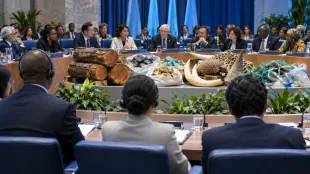
Many measures have been introduced to curb Indonesia’s forest fires over the years. In 2002, ASEAN member countries signed a transboundary haze agreement, a legally binding treaty aimed at preventing and monitoring haze and mitigating land and forest fires. Indonesia was the last country to ratify it in 2014.
After the 2015 fires, President Joko Widodo’s administration set up the Peatland and Mangrove Restoration Agency (BRGM) and made permanent a moratorium on issuing harvesting licenses in primary forest and peatland. In September 2026, his successor, Prabowo Subianto, set up a new agency to replace the BRGM after discussions with academics on forest fires and peatlands management. The National Peatland and Mangrove Management Agency answers directly to the president.
Indonesian courts have ruled against several corporate concession owners for failing to prevent or control fires on their land under the principle of strict liability. However, companies have responded with prolonged judicial appeals or delays in paying court-mandated civil damages for environmental restoration. Law enforcement is employing more technologically advanced means to investigate fires and hold entities accountable, such as satellite verification. Officials from the National Disaster Mitigation Agency announced they are building a mapping system that links satellite fire-tracking to land-concession permits.
In 2023, ASEAN members committed to achieving a haze-free Southeast Asia by 2030. Its second roadmap presents strategies including enhancing implementation of the 2002 agreement, sustainable management of agricultural lands and peatlands, and strengthening relevant laws. Unlike the legally binding 2002 agreement, however, it is only a guiding framework.
Some experts say breaking the cycle requires greater and sustained financing of frontline fire-prevention capacity, supported by collective action. Margareth Sembiring, a research fellow at Singapore’s Nanyang Technological University, stated that any such assistance would need to respect Indonesia’s sovereignty and its primary responsibility for preventing fires within its territory. Without such actions and considerations, the cycle of forest fires and haze will continue.
高-I.Gāo--THT-士蔑報