Belgium opens up Congo archives amid global minerals race / Photo: ERIC LALMAND - Belga/AFP

From century-old maps to meticulous field notes, Belgium is sitting on a trove of geological records on colonial-era Congo -- a coveted archive it is working to open up amid a global scramble for critical minerals.
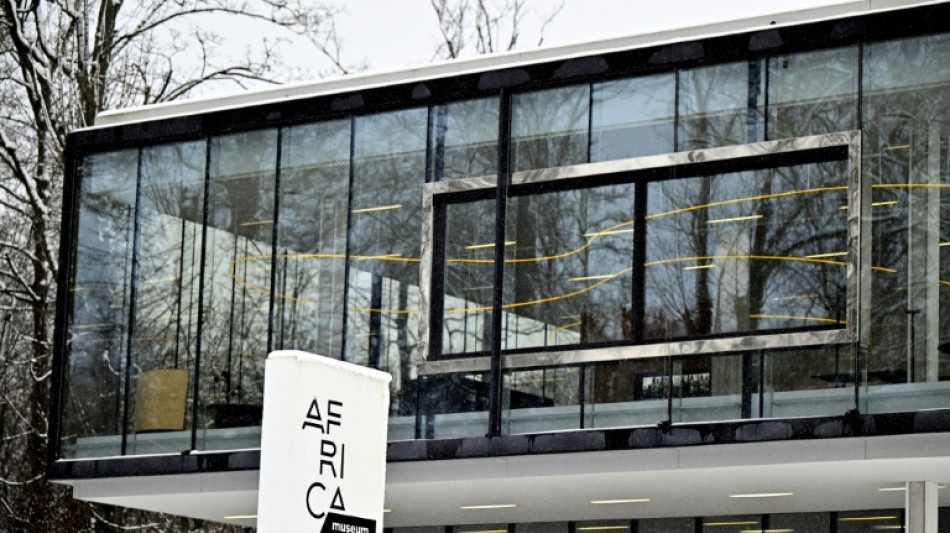
Teeming documents charting the rich subsoil of what is now the Democratic Republic of Congo fill nearly 500 metres of shelving at the AfricaMuseum in Tervuren, outside the Belgian capital.
The museum has pledged to digitise the contents and make them public within five years -- and as the race for so-called rare earths heats up, it has grappled with how far to share the data with the mining sector.
Last year, the institution -- formerly the Royal Museum for Central Africa -- turned down an offer from the US company KoBold Metals to handle the archive's digitisation.
Instead, with significant EU funding, it intends to appoint a European contractor for the mammoth project, currently in its preparatory phase.
The aim is ultimately to make the data available to DRC authorities, both to support scientific research and to help unlock economic opportunities.
From a science standpoint, "the content of the documents is absolutely incredible", said Francois Kervyn, the museum geologist leading the project, describing decades of painstaking fieldwork carried out in largely unmapped regions.
- Unknown regions -
The archive brings together surveys conducted by Belgian geologists as well as files from mining companies that operated in the vast African country before independence in 1960.
"It is the result of an enormous amount of work by people who devoted a large part of their lives to field observations," said Kervyn. "They travelled to completely unexplored regions to conduct surveys, without the positioning tools we have today."
While the original focus was on copper and gold, some records also point to deposits of cobalt and lithium -- minerals that have become strategically vital in recent years.
For Kinshasa, the historical data could help identify new deposits and attract investment as demand surges for materials used in weapons, mobile phones and electric cars.
- Big power competition -
"The Congolese have identified several priority exploration zones -- they are not starting from scratch. We are providing archives to confirm or refine their knowledge," Kervyn said.
One of the 15 least-developed countries in the world, the DRC has some of the richest land on the planet, notably in copper, cobalt, coltan and lithium.
In a sector largely dominated by China, other major powers are increasingly eyeing the Congolese subsoil in an effort to compete -- with the United States in particular seeking to expand its foothold.
After missing out on the Tervuren archives, KoBold Metals secured access last year to the Congolese government's mining data, in what Kinshasa described as a "strategic partnership" to boost US investment.
After a similar project in Zambia, the company is now working to digitise records held at Lubumbashi university in the country's far south.
"The project started in April and we have already digitised around 170,000 pages," KoBold Metals DRC head Benjamin Katabuka told AFP from Lumumbashi.
He highlighted technology that makes scanned documents accessible online to potential investors "in less than a minute".
- 'Monopoly' concerns -
AfricaMuseum director general Bart Ouvry said the Belgian institution turned down KoBold's offer over concerns about giving a single private actor privileged access.
"Granting a monopoly to a company for several years seemed tricky," he said, rejecting suggestions the project was designed to favour European interests.
Belgian officials say the digitisation effort will take no more than five years. It also covers an additional 500 metres of related records held at the state archives in Brussels, inherited from former mining companies.
韓-L.Hán--THT-士蔑報