India Imposes 162.5% Duty on Bulk Scotch Imports Amid UK Trade Pact Dispute
Indian authorities have imposed an effective duty of 162.5% on bulk Scotch imports, triggering a major dispute with the United Kingdom over the implementation of their recent trade agreement. The levy, which exceeds the 75% tariff established by the pact, has resulted in more than 80 shipping containers belonging to Pernod Ricard, Diageo, and Bacardi being stuck at Indian ports.
Indian authorities have imposed an effective duty of 162.5% on bulk Scotch imports, triggering a significant dispute with the United Kingdom over the implementation of their recent trade agreement. The levy, which exceeds the 75% tariff established by the pact, has resulted in more than 80 shipping containers belonging to Pernod Ricard, Diageo, and Bacardi being stuck at Indian ports.
The unexpected increase jolted liquor firms, as the new rate surpasses the 150% duty charged prior to the landmark deal, according to eight sources with direct knowledge of the matter and a government document reviewed by Reuters. The India-UK trade agreement, implemented in July, was designed to halve tariff rates on Scotch to 75%, a move hailed by Britain and major businesses including Pernod Ricard and Diageo as a boost for their operations in India’s $65 billion liquor market.
However, this marks the first major dispute linked to the pact. Indian investigators argue that firms are using incorrect customs classifications for bulk Scotch concentrates, which they deem raw material for blended whiskies. Investigators contend that since May, these imports fall under a newly created customs line for "compound alcoholic preparations," which carries a 150% tariff.
These imports then attract a consumption tax, taking the full duty amount to 162.5%, according to the government document and industry sources. As the standoff continues, thousands of litres of bulk Scotch remain trapped in more than 80 shipping containers at ports, Reuters reported last week.
Under a so-called provisional release pending investigation, companies must pay duty at 75% of the goods' value upfront, with the remainder covered by bank guarantees. "Industry has already reduced prices of Scotch products in the market when the India-UK pact kicked in, and now they are faced with higher duties again," said one source in the liquor importing business.
Pernod Ricard, which owns UK-based Chivas Brothers, along with Diageo and other Indian companies, maintains that both bulk and bottled Scotch imports should be taxed only at 75% as per the trade pact. The British government has repeatedly stated it is working with New Delhi on the issue, while India has indicated the dispute will be resolved soon.
Responding to requests for comment on the 162.5% tariff and tax, a UK government spokesperson said, "ministers are urgently working with the government of India to resolve this issue to ensure UK businesses can export under the tariffs agreed in the trade deal."
Pernod Ricard and Diageo have moved to arrange bank guarantees and other funding to get their blocked containers released so that business can continue. Bacardi is still deciding its next steps, according to three sources.
Shares of Diageo in London and Pernod Ricard in France both dropped following the Reuters story, falling 1.5% and 1.25% respectively during trade. India remains Pernod Ricard's biggest global market by volume, while Diageo dominates the Indian spirits market. Diageo declined to comment, while Pernod Ricard and Bacardi did not respond to queries. The Indian finance ministry and tax authority also did not respond.
Long-drawn tariff disputes have long been a sore point for foreign investors in India, having previously impacted companies such as Volkswagen and Samsung. Indian officials say they only enforce the law of the land, but executives note they are often caught off guard by how New Delhi classifies imports.
Mumbai-listed majors Radico Khaitan, Allied Blenders and Distillers, and Tilaknagar Industries also import bulk Scotch and are under scrutiny, similar to Pernod Ricard and Diageo. Smaller companies face additional stress in arranging bank guarantees, as they may require collateral. Such guarantees must also be reported as contingent liabilities.
"We have no alternative at this stage," said one Indian executive, referring to the potential disruption in the market due to the lack of bulk Scotch. "Meeting the production requirements is extremely critical, even though bank guarantees stress working capital."
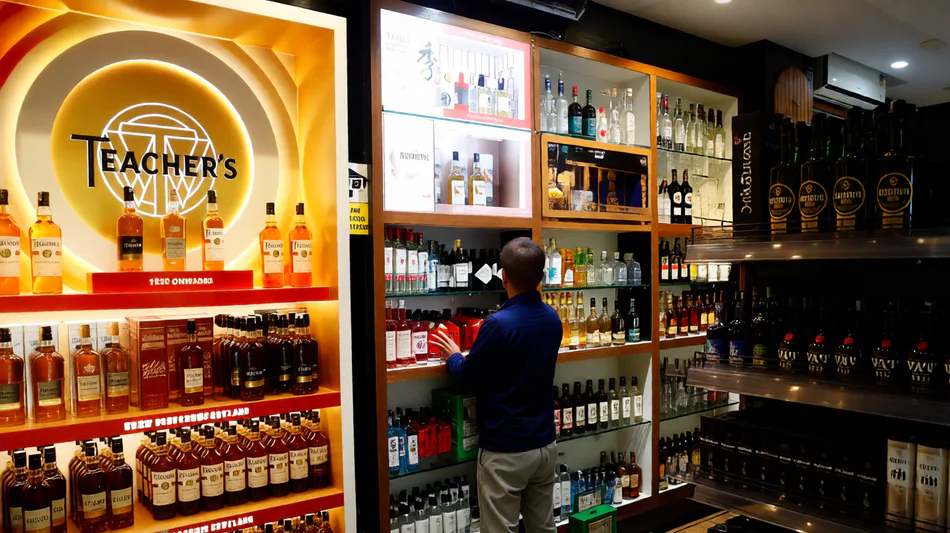
About 80% of Scotch whisky imports from Britain by volume arrive in bulk, and India is the biggest market for Scotch by volume. Most bulk Scotch imports are used to make so-called Indian-Made Foreign Liquor (IMFL) whisky by mixing a small amount of Scotch with other spirits. These mass-market offerings are significantly cheaper than wholly imported whiskies like Chivas Regal or Johnnie Walker.
Whisky tariffs were a sticking point during years of protracted negotiations leading up to the trade deals celebrated on July 15. Britain has stated that iconic UK products, including whiskies, will benefit from the pact. The UK’s Scotch Whisky Association has forecast the trade deal could boost Scotch exports to India by $1.34 billion over five years.
A confidential memo from Indian investigators, reported by Reuters last week, stated that any misclassification under the India-UK pact needs to stop as it has "substantial revenue implications" for New Delhi. Liquor industry sources in India said that while the classification issue was being debated, they did not anticipate the imposition of the additional local tax.
The local tax addition is a "googly," one industry source said, using a cricket term for a deceptive delivery from a bowler.
These developments occur as Prince William and Princess Kate traveled to New Delhi after the Earthshot Prize awards to meet with Prime Minister Narendra Modi at his official residence complex. They expressed appreciation for the "warm welcome" offered by the Indian public. The discussions serve as another significant milestone in William’s diplomatic efforts, leveraging the monarchy’s "soft power" to strengthen ties between the UK and key international partners.
許-X.Xǔ--THT-士蔑報